The History of Trade Shows in Las Vegas
Las Vegas did not become a trade show capital by accident. The city built a rare mix of convention space, hotel rooms, air access, entertainment, restaurants, nightlife, and showmanship that turned business events into a defining part of the destination.
The history of trade shows in Las Vegas starts with tourism promotion, air travel, resort growth, and the Las Vegas Convention Center. The LVCVA archive traces destination-marketing work back to 1947, when local business leaders used tourism promotion to build demand for Southern Nevada. By 1959, the newly opened Las Vegas Convention Center hosted its first convention.
Today, Las Vegas is one of the most important trade show cities in the United States. LVCVA's 2025 research lists about 6.0 million convention delegates, 150,300 hotel rooms, nearly 55 million enplaned and deplaned airline passengers, and more than 14 million square feet of meeting space. The passenger tally counts arrivals and departures, not unique visitors. That history matters for exhibitors because modern trade show staffing in Las Vegas is shaped by the city that grew around the shows.
Use this guide with Trade Show Models Las Vegas and Top Trade Show Venues in Las Vegas so the staffing decision, workflow, and measurement plan reinforce each other.
Before the Trade Show Capital: Tourism Promotion and the Resort Idea
Las Vegas grew from a desert rail and service town into a hospitality market through promotion, gaming, entertainment, and hotel development. The LVCVA archive notes that Las Vegas Chamber of Commerce members created the Livewire Fund in 1947 to promote Southern Nevada tourism, with hotels and motels contributing based on property size. That promotional engine helped sell Las Vegas as an entertainment destination before it became a convention giant.
The convention story is tied to that resort story. A buyer coming to Las Vegas was not just attending a meeting. They were entering a city designed around rooms, restaurants, entertainment, transportation, nightlife, and spectacle. That is still the competitive advantage.
1959: LVCC and the First Convention
The Las Vegas Convention Center hosted its first show on April 12, 1959. LVCVA archive material identifies that event as the World Congress of Flight, held as the jet age was changing travel. The Nevada State Museum also documents the same first convention, noting that it showcased space and aviation progress and included a demonstration from Nellis Air Force Base with the Thunderbirds.
That first show was symbolically right for Las Vegas. Air travel made the city easier to reach. The convention center gave the market a business reason to visit. The resort corridor gave attendees a reason to stay, meet, dine, and entertain clients.
- First LVCC convention: World Congress of Flight, April 12, 1959.
- Original setting: the convention center opened east of the Strip on the site of a former racing property.
- Early theme: aviation, technology, public spectacle, and business travel all arrived together.
From Rotunda to Major Convention Campus
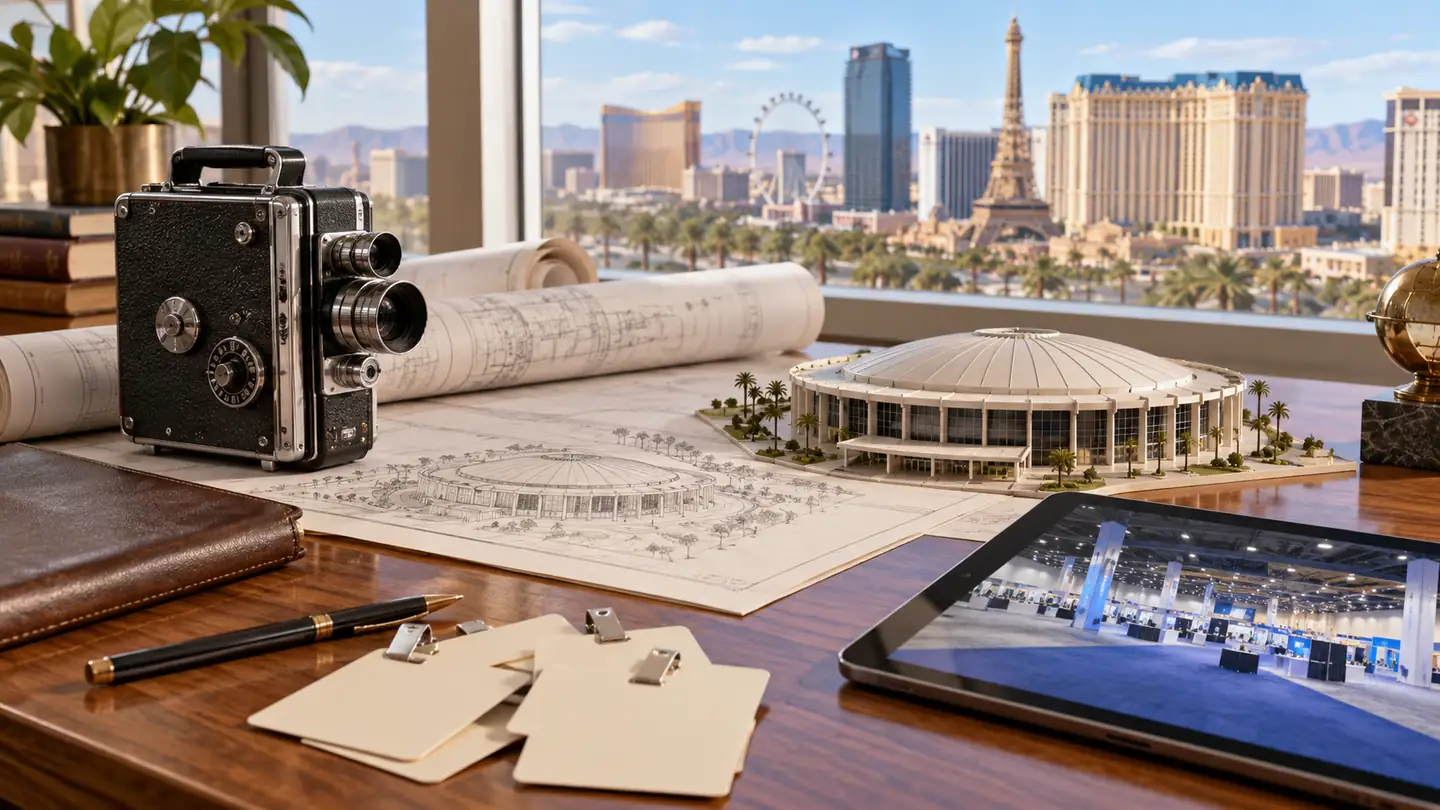
Early LVCC history included the recognizable silver-domed rotunda and later expansions as the city grew. LVCVA archive material describes Central Hall groundbreaking in 1967 as a major milestone in the evolution of the convention center. Over time, the campus moved from a single iconic structure into a large functional trade show complex.
That shift mirrored Las Vegas itself. The city kept adding capacity: more rooms, more restaurants, more entertainment, more airlift, and more specialized venues. Business travel became a core part of the destination rather than a side product of casino tourism.
Mega Hotels Changed the Convention Experience
The rise of mega resorts changed how trade shows worked in Las Vegas. Large hotels added ballrooms, restaurants, theatres, retail, clubs, pools, suites, and meeting space. Exhibitors could hold a booth at LVCC, host a dinner on the Strip, book a suite at Venetian or Mandalay Bay, send buyers to a reception at Caesars Forum, and schedule private meetings without leaving the resort corridor.
That is why Las Vegas staffing is different from staffing a single-hall trade show city. Booth staff may need to understand LVCC, Venetian Expo, Mandalay Bay, Caesars Forum, ARIA, hotel suites, restaurants, clubs, rideshare zones, shuttle routes, Monorail stations, and weather. The trade show floor and the hospitality network operate together.
The Modern Venue Network
Modern Las Vegas trade shows are supported by a venue network rather than one building. LVCC handles many of the largest exhibitions. Venetian Expo supports major expo halls and resort-connected suites. Mandalay Bay adds a south-Strip convention campus. Caesars Forum adds a center-Strip conference center near Koval Lane, Harrah's, The LINQ, Flamingo, and LINQ Promenade. ARIA supports meeting-heavy programs like C Space during CES.
Plan staffing around the specific venue. A staffing plan for West Hall is not the same as a staffing plan for Venetian Expo Hall G, Mandalay Bay Shoreline, Caesars Forum FORUM Plaza, or an ARIA suite. Each venue creates its own arrival, wardrobe, routing, and handoff requirements.
West Hall, the Loop, and the Next Era
In 2021, LVCVA debuted the LVCC West Hall expansion, a $1 billion, 1.4 million-square-foot addition. The announcement said West Hall added 600,000 square feet of exhibition space and 328,000 square feet of column-free space, and that the LVCC Loop became operational with it. The Loop was designed to move attendees through the large campus by underground Tesla vehicles.
That project shows how Las Vegas keeps competing for trade show scale. The problem is no longer just how to host a show. It is how to move attendees, connect halls, support digital branding, shorten walks, and keep large events workable. Staffing plans have to adapt to that infrastructure.
Shows That Define the Las Vegas Calendar
The Las Vegas trade show calendar is shaped by major recurring events: CES, SEMA, SHOT Show, World of Concrete, MAGIC, NAB Show, National Hardware Show, SupplySide Global, IMEX America, JCK, AAPEX, ASD Market Week, Licensing Expo, and many more. Each show brings its own buyer types, product categories, badge rules, transportation needs, and after-hours activity.
For staffing, this means local context matters. CES needs tech and meeting discipline. SEMA needs automotive fluency. SHOT Show requires controlled language and qualified trade awareness. MAGIC needs fashion, retail, and buyer sensitivity. World of Concrete requires product and contractor awareness. The city may be the same, but the staff profile changes.
How the Staffing Role Changed
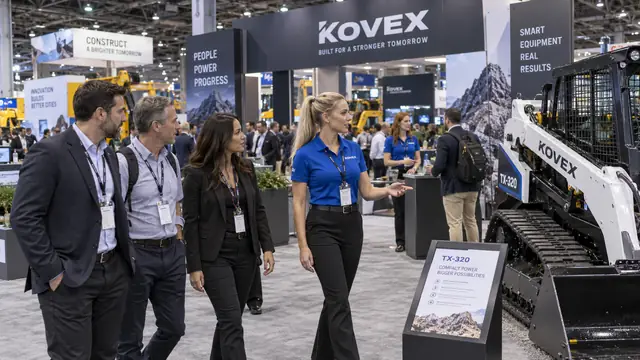
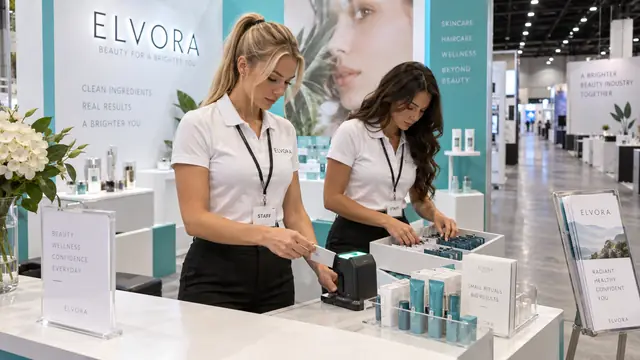
Registration, hospitality, information, booth support, and traffic direction remain core convention staffing tasks. In today's Las Vegas shows, booth staff can also support the sales process. Modern trade show models and brand ambassadors attract attention, qualify visitors, scan leads, support demos, route VIPs, protect the client team's time, and help measure return.
The Las Vegas hospitality model also raised expectations. Attendees are used to polished service, fast direction, clear signage, and confident hosts. A booth team that looks unprepared stands out quickly. A strong local team can make a booth feel organized in the middle of a loud, crowded, high-stakes show.
Why This History Matters for Exhibitors
Las Vegas became a trade show capital because infrastructure and hospitality grew together. That is also why exhibitors should not treat staffing as a last-minute line item. The booth sits inside a mature business-travel ecosystem with hotels, venues, airports, taxis, rideshare, Monorail, Loop, restaurants, nightlife, media, and private meetings all competing for attendee attention.
A good Las Vegas staffing plan uses that history instead of fighting it. It puts the right people at the booth, routes buyers to the right next step, respects the venue, plans transportation, accounts for weather, and turns Las Vegas show traffic into qualified conversations.
Frequently Asked Questions
When did Las Vegas start hosting major trade shows?
Why did Las Vegas become a major trade show city?
What was the first convention at the Las Vegas Convention Center?
How did mega resorts affect Las Vegas trade shows?
Why does Las Vegas history matter for trade show staffing?
How did the Las Vegas Convention Center change exhibitor staffing?
Sources and methodology
TSM Agency combined two decades of event-staffing experience with current exhibitor guidance and the sources below. Rates and venue rules change; confirm final requirements for your show and market.